10.5.13

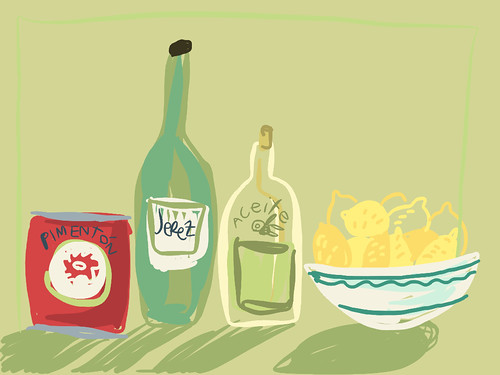
Picnic season


Picnic season is here. It doesn't matter if you are in the "sit on a nettle, eating a wasp" camp or constantly babble "everything tastes better outdoors".
 Like it or not, at some point between now and the end of September you will be balancing a sandwich on your knee.


I myself, am a big fan. I am so prone to picnics that I have several times dragged my children to our neighbourhood park in dead of winter, clutching a thermos of hot chocolate and some biscuits, the better to enjoy the too-early sunsets.
Scotland has that very British craziness of combining the perfect scenery with the worst possible weather. And yet we soldier on.

I won't post recipes, because really, all you need for a picnic is some sunshine, a bit of grass or sand, a blanket, cheese, bread, fruit and water. And if you can make sure the beer is cold, bless you. And nobody ever said no to chocolate.
And don't forget to pack a bottle opener, and a fresbee, or a ball, or a kite, or something that will lull you into a pleasant sense of having been active and outdoorsy as you drift off into a well deserved nap.

I was used to hot weather picnics, which mean coolers full of ice where you nestle the cherries and the chocolate. Where a blanket has to protect your bare legs from thorns and spiky dry grass. And where shade is of the essence.
Now I grapple with such issues as wind breakers, waterproof blankets and wellington boots. But I am free from the ghost of melted chocolate, and if I want a cold drink I only have to plunge a bottle into the icy sea for a couple of minutes.

I do have a bit of a problem with the props. I take a stand against tupperware, paper plates and napkins and plastic glasses. And I hate to see packaging marr the view.
So it's wicker baskets and inconvenient picnic tins for me. And tiffin boxes, striped tea towels, Swiss army knives and enamel plates and cups. It's annoying, but picnics aren't about convenience. They're about nostalgia and pretending to be a character in English literature. Up to you wether you want to be Sebastian with the teddy bear and the strawberries, or Ratty and Mole with the potted-ham-potted-tongue.

1.5.13

Salad

Better weather, sunshine, the first timid buds showing...spring is late this year, but it will come, eventually.
A meal of salad, paté and toast, with some rhubarb and custard at the end, is perfect.
The crayons and pencils and watercolours come outdoors after a whole winter inside, and so we have more sketches, which can only be a good thing.
More soon.

23.4.13

Lentils, pressure cooked.


I guess now is not a very good time to convince people that pressure cookers are perfectly safe, convenient little gizmos that don't explode. They really don't, you know, unless you make them. 
But I can see that the image problem is not likely to go away, so I suggest we call them express pots, like we do in Spanish. Olla Express, now, isn't that a gadget you'd be glad to use? Dear manufacturers and marketers, you are welcome to the idea. I am a pressure cooker evangelist and will be glad to have more converts to the cause.

So, anyway. The recipe. Lentils, cooked until just al dente, well dressed with a punchy dressing and a few crunchy things. It may be one of the perfect side dishes, and is one of my favourite things for lunch. You'll probably only find Puy or so called Puy lentils, but of course I would recommend Spanish pedrosillanas for this.

Here's what you do. You take your express pot (see what I just did there?) and put in a cup of lentils, a bay leaf or a good pinch of dried oregano, some salt, and perhaps a garlic clove or a shallot. Salt is controversial so you can do without and use it later, if you prefer.
Add water to cover by three centimetres/an inch. Lock the lid, bring up to pressure. When it's up, give it two minutes and turn off the hob. Now let it come down naturally for ten. Don't leave it longer or it will turn into lentil stew, which is fine but a different thing.

When you open it, drain the lentils but reserve the liquid, plus a couple of spoonfuls of lentils. 

Put these lentils in a pretty bowl or plate, and while they're warm, dress them. Olive oil and lemon for starters, and then any or all of these, well chopped: capers, shallots, dill pickles, parsley, almonds. You may want a touch of mustard, perhaps some sherry vinegar, probably some black pepper. See how you like it, and try it once again before you serve because they soak up the dressing a lot and you may want more oil or lemon or salt.

I love this with another salad of beets, or grated carrots. And boiled eggs and brown bread, or smoked mackerel, or these sausages. Anything, really.

Next day, a soup. I know you´ll think that that muddy looking liquid is ugly and useless, but trust me.

All you do is chop some celery, onion and carrot into little dice. If it makes you feel better by all means call it mirepoix. Sweat this in a little oil or butter or both, inside your express pot (ahem) and add the lentils and liquid, plus a cup or good stock, if you have it. If not, water with a bit of good stock powder will be fine, or just water, but the real chicken stock brings it up a few notches.
Bring up to pressure, give it three minutes. This is an understated soup, but very good. It has more heft than just vegetables, but is way gentler than all lentils. Put some lemon juice and some Sherry there, too, and perhaps a few fresh herbs to brighten the colour. It is just the thing for these spring days that are always colder than you hoped.

Let's give pressure cookers a good name, go on.

16.4.13

Back to blogging

Hello dears.
I've been away for a month and during all that time I would think "oh, I have to do a post about this" but then I'd forget, or I'd have to meet a deadline, or I'd rush off to the other end of the Mediterranean, or I'd go to a wedding, or a carrousel, or have to choose the colour of a wall. It was pretty exhausting, let me tell you.

When we got back, I thought it would be good to do a post about the food you eat when you come home after a month. And another about the foods I was glad to have again. And another about what I brought back in my suitcase. But then I got sidetracked by packing, and then, bla bla bla. You know. The usual.

Which is to say, I will be back, I will write, I will post, and there will be recipes. There is a certain olive oil cake that brings tears of joy. A salty yogurt drink. A nifty way with run-of-the-mill mozzarella. Etc. But first, I need to do some work.

In the meantime, I leave you with this sketchbook page. It has drawings of all the faces in last month's Observer Food Monthly. Geeks may recognize my clumsy attempts at Nigel Slater, Rene Redzepi and Danny Bowien there somewhere.

13.3.13

Off to Sicily

New readers, enjoy my Sicilian posts of last year. Old readers, take another look and tell me how lucky I am to be going again to the Anna Tasca Lanza cookery school. Béa of La Tartine Gourmande is doing a workshop. You will never see buckets of ricotta looking so pretty.

Will report back. Ciao for now

4.3.13

Cocido Madrileño


Cocido means boiled. 
It sounds simple, and it is. Hunks of meat, a bunch of chickpeas, some vegetables, water, time. Everywhere where there are pots and pans and beans and bones there is some sort of cocido.
However, half the point of cocido, or puchero, or potaje, berza, olla, fabada, caldo or escudella, whatever you want to call it, is to make it into an exercise of nostalgia. You make the type they make where you are from. And if you don't have someone back in the old village who kills a pig and can send you a few chorizos, you will at least find a market stall with a charcutería from your region, because the butcher is sure to have someone back home sending him the good stuff.
And then you will make it and eat it and argue with your friends the relative merits of the cocido montañés over the cocido maragato, as the case may be. And you may have to loosen a button or two, and a grand time will be had by all.

I, of course, come from Madrid, which also happens to have the best cocido of them all. Naturally. So I skip the arguing part.

Cocido in Madrid means chickpeas, not beans.  It has beef, and ham, and chorizo and morcilla and tocino and chicken. And potatoes and cabbage. And tomato sauce. We serve the broth first, with noodles, which is basically the only difference with most of the others.

As I say, half the point is in the experience. In going to market on a Saturday morning, queuing, maybe even fighting a little, getting some advice, wheedling a couple of extra marrow bones from the butcher, stopping for a caña on the way back. Obviously I can't do that in Aberdeen. Even if  there was a market, I wouldn't find all the ingredients I need. 
Except that I've discovered that if you take the broad, sweeping view, and attack the thing in a can-do spirit, you can make a wonderful exile's cocido. My version is unorthodox, but it's easier. Also, because it's not really cocido madrileño it can stand in for most of the regional versions. It is as heretic to call this a cocido as it would be to call it a puchero, so go ahead and make it and call it whatever you want.

What I do is boil the meat and chickpeas, sautee the sausages, and serve the cabbage as a salad. Different textures and colours , and it's pretty quick, you'll see.

First off, shopping. Potatoes, chickpeas and cabbage are all easy. The shin of beef, also. Here it's cut like osso buco but that's ok. There is no jamón serrano, but there are beautiful smoked ham hocks. There are no boiling hens, and for my streamlined method I can't use normal chicken, so I do without. Likewise the tocino is off the books. There is enough pork fat anyway. For morcilla I refuse to substitute haggis, because, you know. Enough already. 
The chorizo found here is not very good. Instead, I buy the very excellent local pork sausages, and hit them with garlic and pimentón. It is awesome.

Now, for the method. Quantities are for 4/6.

Put  500 gr of  chickpeas, unsoaked, in a 6 litre pressure cooker. Add a smoked ham hock, two pieces of osso bucco or a single 1 kg piece of beef shin (or oxtails, or tongue. Whatever you have). A bay leaf, carrot and whole onion and celery stick are nice.
When it comes up to pressure, give it 40 minutes and let it drop naturally.
This takes about an hour altogether.

In the meantime you can shred a head of white cabbage and dress it simply with a bit of raw garlic, cumin, olive oil, vinegar and salt.

All this can be done ahead, first thing in the morning, or even the day before.

When it's almost time to eat, cut up the sausages into chunks the size of a walnut. Sautee them over high heat in your largest frying pan. When they're crusty and golden, add a spoonful of pimentón and a couple of crushed garlic cloves. Swirl it around, and put it on a platter so as not to burn the garlic or the pimentón.

Now, when you open the pot you'll see that you have tender meat and a lovely golden broth. First, fish out the vegetables and throw them away. 
Now, take out the meat and put it on a platter in large chunks. The marrow bones are the best bit and you should probably stake them out. Cook's treat.

Strain the broth. You can heat it up in a separate pan and boil some tiny noodles in it. Or simply serve it in mugs or consommé cups. This is, without a doubt, the single most delicious soup you will ever have. Just saying.

When that is over, have the meat, chickpeas and fake chorizo, with the fresh and zingy cabbage slaw.
If you have very hungry people to feed, or more than you expected, or you are counting on having leftovers, you could consider boiling some potatoes while you make the salad. 
This is not essential but highly recommended, since it gives you a higher chance at achieving the highest purpose of cocido: having ropa vieja the next day, and arroz del señorito after that (I promise to post about the leftovers).

Illustration is a sketch copied from a photo in Jerusalem. 

28.2.13

Paris


Tartare, originally uploaded by Lobstersquad.

Aren't you glad I'm going to spare you a bunch of fuzzy edged high contrast yellowed out Instagram pics?
I don't even have any sketches, because it was very cold and stopping for even a second was impossible.
We walked and walked and it was lovely because it always is. And like I always do I had steak tartare and it was beautiful.
So there you are.
Next up, a proper post about cocido madrileño, to counteract all this francophilia.

22.2.13

Business Cards


Business Cards, originally uploaded by Lobstersquad.

I'm off to Paris, to the Gourmand cookbook fair. Just as a spectator. But because you never know, I've made a batch of business cards to take with me. Handmade, since moo.com offers so many choices that in the end I couldn't choose.

I have nothing to do for two days but walk around, eat, sketch. I pack no wet wipes, emergency bananas, cardboard copies of The Gruffalo, and it is pure bliss.
But of course I love my children and will be sure to bring back their requests: green and brown macarons for Pepe, pink and brown for Pia.

15.2.13

My favourite 5 minute meal


Not that I want to fetishize speed. No sense in that. It may be fun to see Jamie Oliver run around like a wet hen making a 15 minute chicken bolognese, just like it's entertaining to watch a fully grown man lock himself into a briefcase.  Not to be tried at home, but otherwise, no harm. If I have three hours to let a bolognese sauce blip away, I do, and if I want a plate of pasta in 15 minutes, I make this, or this.

But sometimes I really need to get food on the table very fast. Enter the 5 minute wonder that is polenta with garlicky greens and a poached egg.

To tell you the truth, I most often allow myself ten minutes for this, but anyway, that's still fast. 

Start by boiling a kettle, so you can jumpstart the poached eggs and instant polenta.

Now put a 3 litre pressure cooker on the hob with a slick of oil and a couple of smashed garlic cloves. While they heat, wash a head of broccoli. Cut it up in big chunks, no finesse, but do peel the stalk and slice it in tickish rounds.  This works with kale, spinach, spring greens, the usual.
Throw it into the cooker, salt it,  and add as little water as you can get away with. My pressure cooker is a WMF Perfect that comes up to pressure with 100 ml. Lock, and set the timer for ONE minute.
Poach the egg/s, make the polenta. You'll be feeling like a one-man orchestra by this point so perhaps ask someone else to lay the table if you can.
When the timer goes for the broccoli you can either bring the pressure down immediately for tender florets. Or you can let it keep pressure, off the hob, for two minutes before bringing it down. This will give you that  very soft, melting, khaki coloured broccoli beloved of Italians.
Without a pressure cooker the timings are different, but use this method.

By now the polenta will be ready, so spoon it onto a plate, top with the greens, add olive oil and lemon juice, and settle the drained egg on top. Parmesan and black pepper always welcome.

The good thing is that if the polenta is ready before anything else, you can let it sit and bring it back to texture with more hot water and a whisk. And the eggs can be made ahead. And the greens are lovely at room temperature. So it's a very accomodating meal, ready in five minutes, or ready when you are.

5.2.13

Instant polenta


Poor polenta. So maligned. 
It does my head in when I read the sort of apologetic, bumbling recipe headnote that says "polenta is bland, but you can jazz it up by boiling it in milk, and then adding a ton of cheese and herbs and stuff".
What's the sense in that? Of course polenta is bland, that's the whole point about polenta. Just like bread, or rice, or pasta. Bland, cheap, filling stuff on which you put savoury, punchy, hot, expensive stuff. It's called dinner. 

Then, once you've cleared that hurdle and accepted, welcomed, even, the fact that polenta is bland and that's ok, you smash into a wall. "Polenta takes an hour of careful stirring, but that's ok".
No, dear food writers who art in another planet. It is so not ok to stir for an hour, or forty minutes, or whatever you say, specially for something that is dammed with faint praise upfront.

There are two ways around that. One is to cook polenta in a rice cooker, which does all the work for you. It takes its time to cook, like on a stove, but it's hands-off time.

Or, you can use instant polenta. And no, the world will not fall apart. And nobody will know. Because that thing about polenta being bland we talked about? Well, it works to your advantage. Instant polenta is bland, sure, but, ahem, so is the other, arm-destroying, real one. So there you are. Two minutes away from a bowl of creamy, sunshine-yellow, comfort in a bowl, ready to be topped with a bit of this or that and a shower of grated cheese.
One of my favourite fast lunches is soft polenta, topped with pan-steamed broccoli and topped with a poached egg.
And it behaves just like regular polenta does, in that once it's set you can slice it and grill or fry it until crisp. 

But that's not all. Instant polenta (I mean the ground stuff, by the way, not those horrid blocks) is something you need to have to hand for many other things:

It can take the place of breadcrumbs in many of the places you need them: to coat crisp fried things, in meatball mixes and the like. 

I also use it to thicken soups or stews. Not the more delicate or dark or Asian flavoured ones, of course. But if a run of the mill chickpea soup is looking a bit more soupy than I like, a bit of instant polenta thickens immediately.

Heat milk with frozen corn kernels and a bit of salt, add some instant polenta and there it is: creamed corn. Lovely stuff.

Mix some into your crumble toppings. This works just as well with the non-instant kind of cornmeal. But the instant one is what I use to mix with the fruit that goes inside, instead of cornstarch. It's much tastier, and the grainy texture pleasantly rustic.

I´d be lost without it, I really would.

(Drawing totally unrelated, of course, but the book is just out, and I like the cover. Catalan readers, storm your local bookshops right away)

Share